
STEAM Program
STEAM education has become increasingly important and equally popular over the last few years. STEAM programs incorporate science, technology, engineering, arts (including visual and language arts), and mathematics, subjects that have traditionally been taught individually, and combine the subjects through immersive projects that emphasize the interconnectedness of each subject in real-world situations. Students gain valuable experience putting their math and technology skills to use while following the steps of the scientific method and the engineering process, all while taking care to analyze the effects of and integrate artistic design principles into their projects. Our STEAM program includes a variety of learning opportunities including Make-It Days, in which students have the opportunity to spend a day creating something innovative or developing a new skill such as playing the violin, composing music, or carpentry; computer science studies, including programming, 3D modeling and printing, robotics, and digital graphic design; engineering challenges; and more.
Meet our faculty and staff
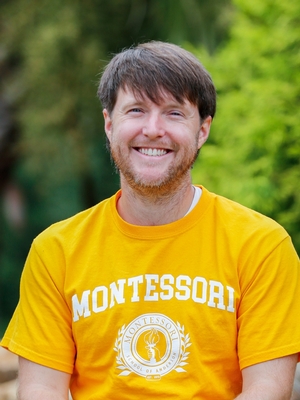
Matt Dabney
Technology Coordinator, Technology Teacher
Matt Dabney holds both a B.S. and M.S. in Computer Science from Clemson University, where he served as a graduate assistant managing the department’s computing systems. At the Montessori School of Anderson since Fall 2018, he has served as Technology Coordinator—keeping our campus seamlessly connected and supported—while teaching technology to Upper Elementary, Middle School, and High School students. Known for his good humor and highly popular summer programming and technology camps at MSA, Mr. Dabney also guides the student yearbook staff and delights in introducing STEAM (Science, Technology, Engineering, Art, Mathematics) concepts to some of our youngest learners, Primary risers (K5). In addition, he supports the secondary curriculum by teaching upper-level mathematics, including pre-calculus and calculus, when needed.